Skip to content
Spectrum Life Academy logo
Riding the Bus & Using Elevators visual schedule picture cards for autistic children: Cover
Cover, preview 1 of 7

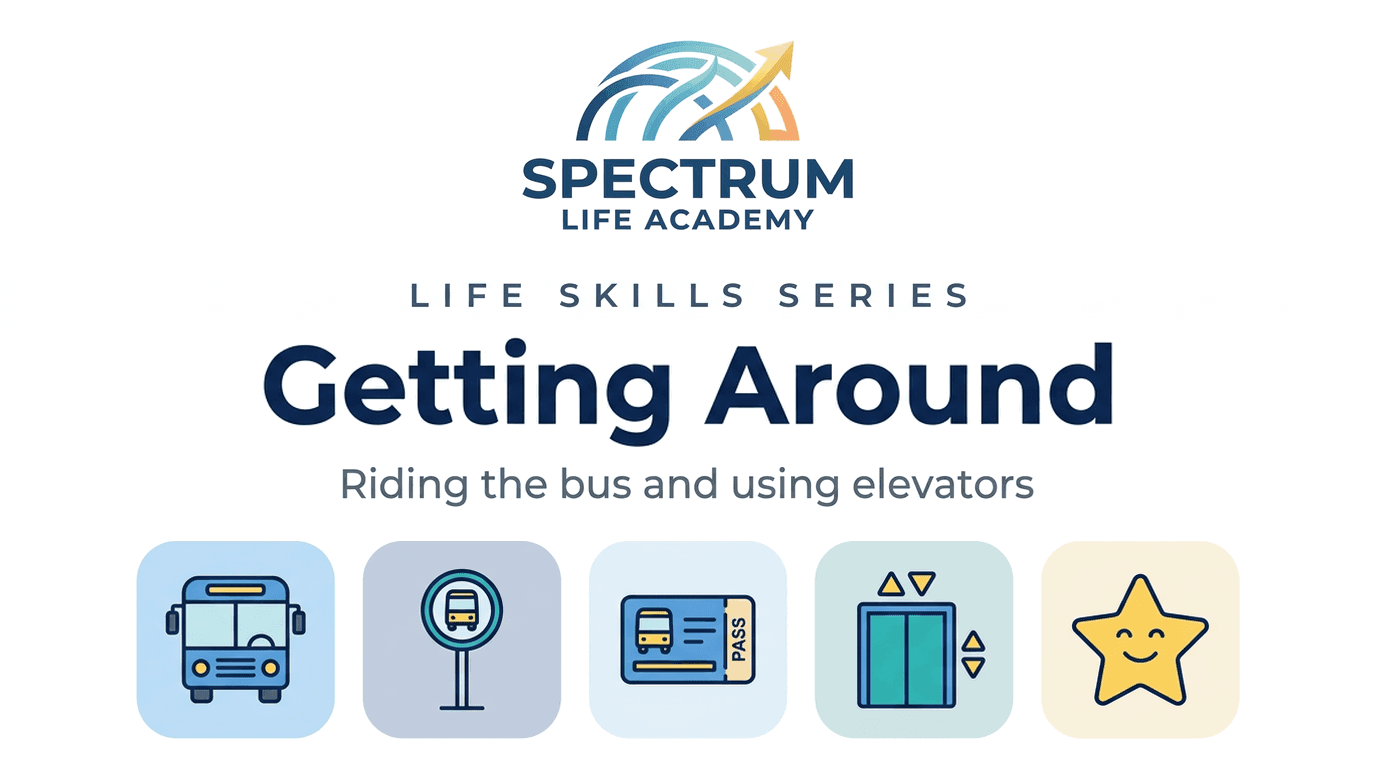
Riding the Bus & Using Elevators

Prepare kids for public transportation and elevators: waiting at the stop, paying a fare, choosing a seat, pressing floor buttons, and riding calmly.

Ages
6–18
Pages
10
Save with the Community & Money Bundle — $16.99 for all 5 kits

Your printable PDF appears on your order confirmation page and in My Library right after purchase.

How this kit helps with riding the bus and using elevators

Public transportation and elevators open up the community, but they can be confusing and crowded. This kit prepares your child with steps for waiting at the stop, paying a fare, choosing a seat, pressing floor buttons, and riding calmly.

A social story explains what to expect, including noises, stops, and people getting on and off.

Riding the bus and using elevators visual schedule, step by step

  1. 1Wait at the bus stop
  2. 2Check the bus number
  3. 3Get on and pay your fare
  4. 4Find a seat or hold a pole
  5. 5Watch for your stop
  6. 6Press the button to stop
  7. 7In an elevator: press your floor number
  8. 8Step out when the doors open on your floor

Common challenges with riding the bus and using elevators

Buses and elevators are enclosed, sometimes crowded, and full of unexpected noises and movements. Knowing when to get off requires attention and planning, and delays or route changes can be upsetting.

How to teach riding the bus and using elevators to an autistic child

  • Ride the route together several times before independent rides.
  • Take photos of landmarks near your stop as visual cues.
  • Practice elevator buttons at quiet times.
  • Use headphones or a fidget during the ride.

What's inside

  • Parent GuideHow to introduce the skill, prompt gently, and fade support over time.
  • Visual ScheduleEach step of the routine as a clear picture sequence to follow.
  • Social StoryA short, reassuring story that explains what happens and why.
  • Picture CardsCut-out cards for each step, for practice, sequencing, and reminders.
  • Sticker ChartA simple reward chart to celebrate every successful try.
  • Progress TrackerTrack independence step by step and notice growth over weeks.

What age is this riding the bus and using elevators kit for?

Recommended for ages 6–18

Every child learns at their own pace. Go by your child's readiness rather than their age, and use as many or as few steps as they need.

How to use this kit

  1. 1
    Read the story firstShare the social story a few times before practicing, at a calm moment.
  2. 2
    Practice one step at a timePost the visual schedule where the routine happens and point to each step.
  3. 3
    Celebrate small winsAdd a sticker for every try, then log progress weekly to see what is sticking.

Licensed to the purchaser for use in your home, your own classroom, or your own therapy practice.

This kit is a teaching aid and is not medical advice.

Riding the bus and using elevators questions parents ask

When can my child ride the bus alone?
It depends on safety skills, the route, and your community. Many families start with rides together, then follow in a car, before independent trips.
My child is anxious in elevators. What can help?
Read the social story, practice in quiet elevators, and let your child press the buttons for a sense of control. Taking the stairs is always a fine option while they get comfortable.
  • Also available printed

    Shopping Basics

    Ages 4–18

    Prepare kids for a store trip with a picture shopping list, finding items on shelves, staying with an adult, and handling crowds and noise.

    $4.99
  • Also available printed

    Coins & Bills

    Ages 6–18

    Teach kids to recognize coins and bills, learn what each is worth, and count out simple amounts using hands-on, real-world money practice.

    $4.99

  • Also available printed

    Checking Out at the Store

    Ages 5–18

    Walk through the checkout line step by step: waiting in line, placing items on the belt, paying, taking the receipt, and saying thank you.

    $4.99