
Skip to content
Spectrum Life Academy logo
Shopping Basics visual schedule picture cards for autistic children: Cover
Cover, preview 1 of 7

Shopping Basics

Prepare kids for a store trip with a picture shopping list, finding items on shelves, staying with an adult, and handling crowds and noise.

Ages
4–18
Pages
10
Save with the Community & Money Bundle — $16.99 for all 5 kits

Your printable PDF appears on your order confirmation page and in My Library right after purchase.

How this kit helps with grocery shopping

Stores are bright, loud, and crowded, and that can make shopping trips hard for the whole family. This kit prepares your child with a picture shopping list, steps for finding items on shelves, staying with an adult, and handling crowds and noise.

Having a job, like finding items on the list, gives your child a clear purpose during the trip and makes it more predictable.

Grocery shopping visual schedule, step by step

  1. 1Look at your picture shopping list
  2. 2Stay with your grown-up
  3. 3Find the first item
  4. 4Put it in the cart
  5. 5Check it off your list
  6. 6Find the next item
  7. 7Go to checkout when your list is done

Common challenges with grocery shopping

Stores are full of sensory input: fluorescent lights, background music, beeping scanners, and crowds. There are tempting items everywhere, and the visit can feel endless without a clear end point. Waiting in line is hard too.

How to teach grocery shopping to an autistic child

  • Start with short trips for just two or three items.
  • Shop at quiet times, like weekday mornings.
  • Bring noise-reducing headphones or sunglasses.
  • Give your child the job of holding the list and checking off items.

What's inside

  • Parent GuideHow to introduce the skill, prompt gently, and fade support over time.
  • Visual ScheduleEach step of the routine as a clear picture sequence to follow.
  • Social StoryA short, reassuring story that explains what happens and why.
  • Picture CardsCut-out cards for each step, for practice, sequencing, and reminders.
  • Sticker ChartA simple reward chart to celebrate every successful try.
  • Progress TrackerTrack independence step by step and notice growth over weeks.

What age is this grocery shopping kit for?

Recommended for ages 4–18

Every child learns at their own pace. Go by your child's readiness rather than their age, and use as many or as few steps as they need.

How to use this kit

  1. 1
    Read the story firstShare the social story a few times before practicing, at a calm moment.
  2. 2
    Practice one step at a timePost the visual schedule where the routine happens and point to each step.
  3. 3
    Celebrate small winsAdd a sticker for every try, then log progress weekly to see what is sticking.

Licensed to the purchaser for use in your home, your own classroom, or your own therapy practice.

This kit is a teaching aid and is not medical advice.

Grocery shopping questions parents ask

My child melts down in stores. Should I stop bringing them?
Many families take a break and then start again with very short, planned trips. Use the social story beforehand, go at quiet times, and leave before your child gets overwhelmed.
How do I handle requests for things not on the list?
Set expectations ahead of time with the list and a 'one treat' card if you want. Pointing to the list makes the answer about the plan, not about you saying no.
  • Also available printed

    Coins & Bills

    Ages 6–18

    Teach kids to recognize coins and bills, learn what each is worth, and count out simple amounts using hands-on, real-world money practice.

    $4.99
  • Also available printed

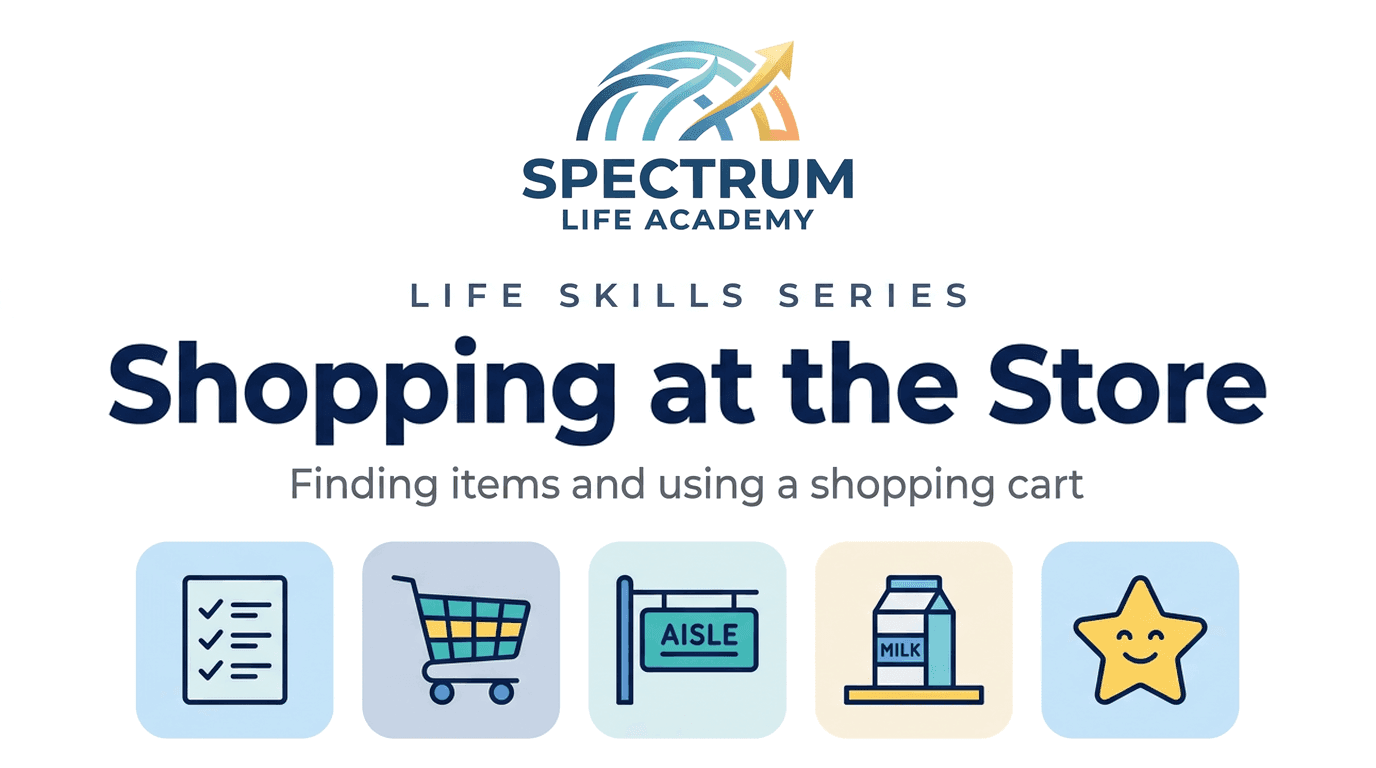
    Checking Out at the Store

    Ages 5–18

    Walk through the checkout line step by step: waiting in line, placing items on the belt, paying, taking the receipt, and saying thank you.

    $4.99

  • Also available printed

    Ordering Food

    Ages 5–18

    Build confidence ordering at a counter or restaurant, from reading a picture menu and saying the order to paying and waiting for food.

    $4.99