Skip to content
Spectrum Life Academy logo
Brushing Teeth visual schedule picture cards for autistic children: Cover
Cover, preview 1 of 7

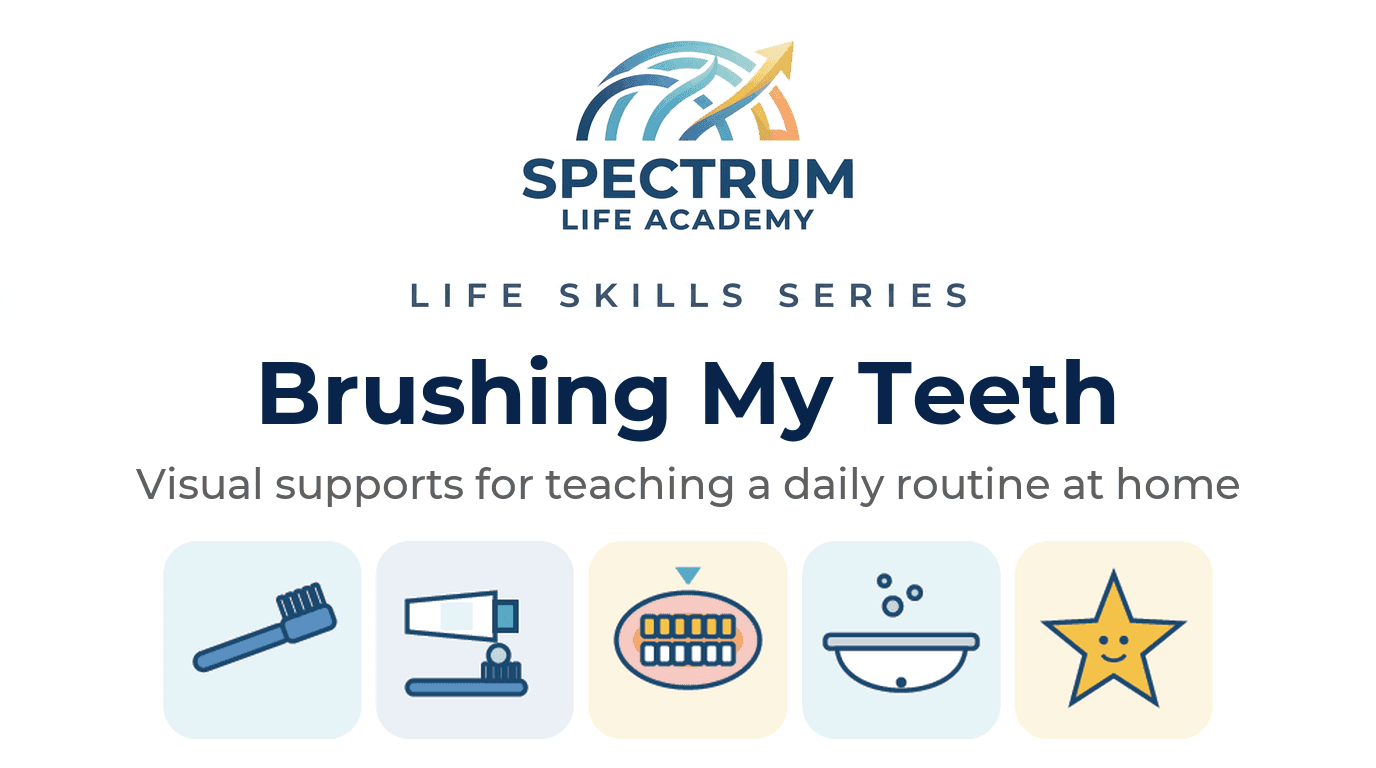
Brushing Teeth

Break tooth brushing into small, visual steps, from a pea-sized dab of toothpaste to two minutes of brushing every side, so kids can brush on their own.

Ages
3–12
Pages
7
Save with the Personal Hygiene & Grooming Bundle — $34.99 for all 10 kits

Your printable PDF appears on your order confirmation page and in My Library right after purchase.

How this kit helps with tooth brushing

Tooth brushing happens twice a day, every day, which makes it one of the best routines to build independence with. It is also one of the most common battles at the sink. This kit breaks brushing into small, picture-supported steps so your child knows exactly what comes next and when it is finished.

The social story explains why we brush in calm, concrete language, and the visual schedule sits right by the sink so you can point instead of talk. Over time you can step back from hand-over-hand help to a gentle point, and then to just a glance at the chart.

Tooth brushing visual schedule, step by step

  1. 1Get your toothbrush and toothpaste
  2. 2Wet the toothbrush
  3. 3Squeeze a pea-sized dab of toothpaste
  4. 4Brush the top teeth, front and back
  5. 5Brush the bottom teeth, front and back
  6. 6Brush the chewing surfaces
  7. 7Spit into the sink
  8. 8Rinse your mouth and the toothbrush
  9. 9Put everything away

Common challenges with tooth brushing

Brushing asks a lot of the senses all at once: the strong mint taste, foamy texture, bristles on the gums, and the sound of the brush inside the mouth. Many autistic kids also find it hard to know when they are done, because 'brush your teeth' doesn't say how long or which teeth. Without a clear sequence and a clear end point, brushing can feel unpredictable and overwhelming.

How to teach tooth brushing to an autistic child

  • Try a mild or unflavored toothpaste and an extra-soft brush if the taste or bristles are a barrier.
  • Use a two-minute sand timer or a short song so 'done' is something your child can see or hear.
  • Brush side by side in the mirror so your child can copy you, then gradually do less of the modeling.
  • Practice when nobody is tired. A calm afternoon run-through beats a rushed bedtime attempt.

What's inside

  • Parent GuideHow to introduce the skill, prompt gently, and fade support over time.
  • Visual ScheduleEach step of the routine as a clear picture sequence to follow.
  • Social StoryA short, reassuring story that explains what happens and why.
  • Picture CardsCut-out cards for each step, for practice, sequencing, and reminders.
  • Sticker ChartA simple reward chart to celebrate every successful try.
  • Progress TrackerTrack independence step by step and notice growth over weeks.

Skills taught

  • Getting toothbrush and toothpaste ready
  • Using a pea-sized amount of toothpaste
  • Brushing top, bottom, front, and back teeth
  • Brushing for two minutes
  • Spitting and rinsing
  • Putting supplies away

What age is this tooth brushing kit for?

Recommended for ages 3–12

Every child learns at their own pace. Go by your child's readiness rather than their age, and use as many or as few steps as they need.

How to use this kit

  1. 1
    Read the story firstShare the social story a few times before practicing, at a calm moment.
  2. 2
    Practice one step at a timePost the visual schedule where the routine happens and point to each step.
  3. 3
    Celebrate small winsAdd a sticker for every try, then log progress weekly to see what is sticking.

Licensed to the purchaser for use in your home, your own classroom, or your own therapy practice.

This kit is a teaching aid and is not medical advice.

Helpful supplies for this kit

Optional items families find useful alongside this kit.

See all recommended supplies
  • Kids' toothbrush timer

    Link coming soon

As an Amazon Associate we earn from qualifying purchases.

Tooth brushing questions parents ask

What if my child hates the feel of the toothbrush?
Start smaller than brushing. Let your child hold the brush, touch it to their lips, then to the front teeth, and celebrate each step. Soft silicone or extra-soft brushes and room-temperature water often help. Move to the next step only when the current one feels easy.
Should I still check their teeth once they brush on their own?
Yes. Most children need an adult to check or finish brushing until around age 7 or 8, and longer if fine motor skills are still developing. You can add a 'grown-up check' as the last picture on the schedule so it feels like part of the routine, not a correction.
  • Also available printed

    Washing Hands

    Ages 3–12

    Teach the full handwashing routine: wet, soap, scrub for 20 seconds, rinse, and dry. Picture prompts sit right at the sink so kids know when to wash and how.

    $4.99
  • Also available printed

    Showering & Bathing

    Ages 3–12

    Make bath and shower time predictable with a picture sequence for testing water temperature, washing each body part in order, rinsing, and drying off.

    $4.99

  • Also available printed

    Washing Hair

    Ages 3–12

    Ease the stress of hair washing with a social story about water on the face, plus clear steps for wetting, shampooing, rinsing, and conditioning.

    $4.99